Search is changing. Your customers may still type a few words into Google, but they can now also ask a detailed question and receive an AI-generated answer. That answer might appear in Google, ChatGPT, Microsoft Copilot or another AI-powered service.
This change has introduced a collection of new terms, including GEO and AEO. Understandably, many businesses are wondering whether traditional SEO still matters and whether they now need a completely different strategy.
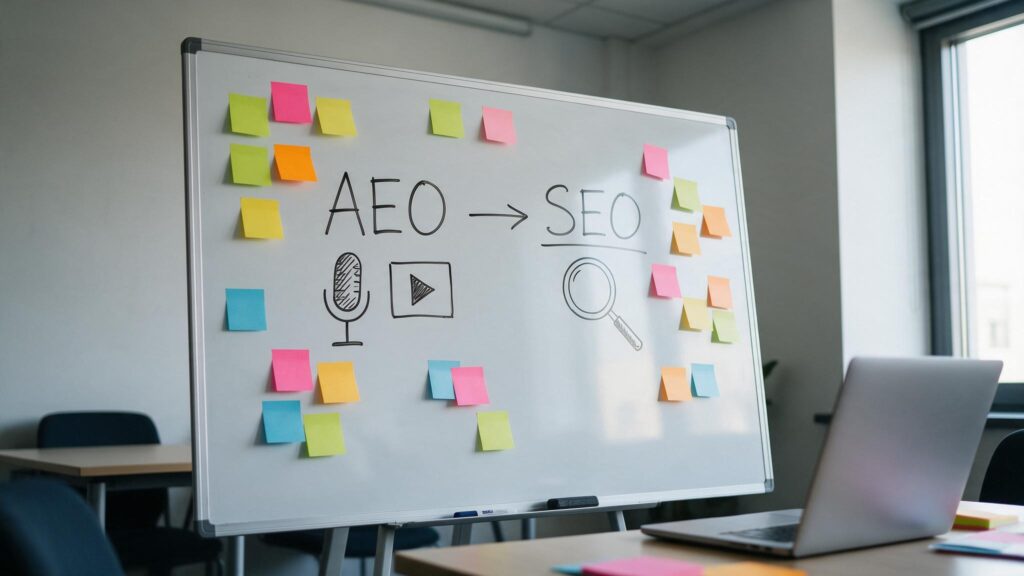
The short answer is that SEO remains the foundation. GEO and AEO build on many of the same principles, while AI search describes the changing environment in which people discover information.
Here is a straightforward explanation of what each term means and how they fit together.
What is SEO?
SEO stands for Search Engine Optimisation. It is the process of improving a website so that search engines can find, understand and show its pages to the right people.
SEO can include:
- researching what potential customers search for;
- creating genuinely useful pages and articles;
- making a website fast, secure and easy to use;
- ensuring search engines can crawl and index its content;
- improving page titles, headings and internal links;
- earning trust through expertise, reputation and relevant links; and
- improving local visibility through an accurate Google Business Profile.
The aim is not simply to attract more visitors. Effective SEO should bring the right people to your website and help them take a useful next step, such as making an enquiry, booking a consultation or purchasing a product.
What Is SEO and Why Does It Still Matter?
What is AI search?
AI search describes search experiences that use artificial intelligence to interpret a question, gather information and produce a direct response.
Traditional search usually presents a ranked list of links. AI search may instead summarise a subject, compare options or answer a more conversational question, often with links or citations that allow the user to explore the sources.
Examples include Google’s AI features, ChatGPT search and Microsoft Copilot. AI search is not one separate search engine or one fixed technology. It is a broader change in how information is found and presented.
A person might traditionally search for “WordPress agency North Wales”. In an AI-search tool, they may ask:
Which WordPress agencies in North Wales have experience supporting established businesses, and what should I ask before choosing one?
That longer question contains more context and may result in a tailored answer rather than a simple list of websites.
What Is AI Search and How Is It Changing Customer Behaviour?
What is GEO?
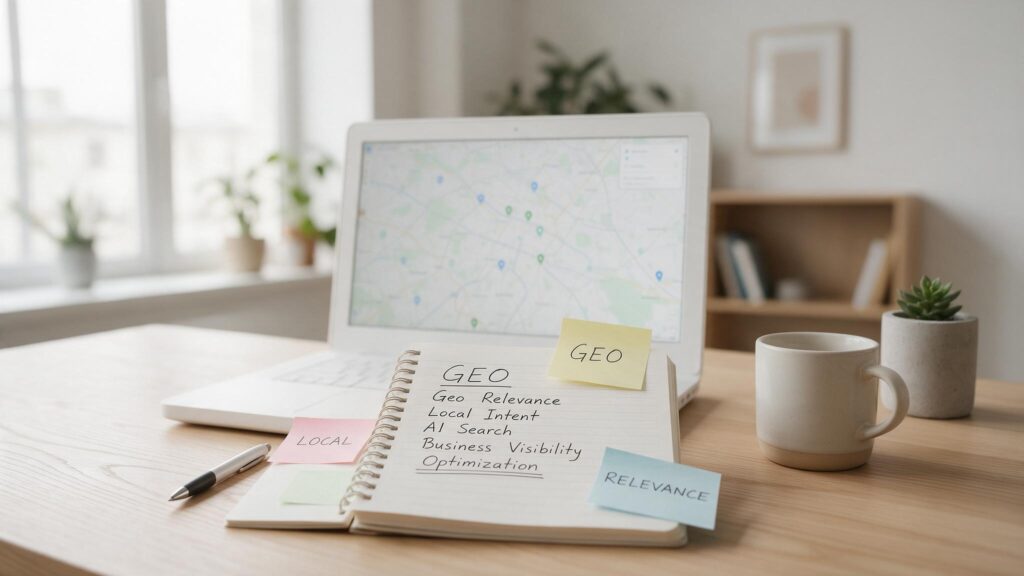
GEO stands for Generative Engine Optimisation. It is the practice of improving a business’s online information so that generative AI systems can more easily understand it and may be more likely to use, cite or recommend it when relevant.
GEO is still an evolving term rather than a universally agreed set of rules. In practical terms, it means making your organisation, expertise, services and evidence clear across your website and wider online presence.
This may involve:
- publishing accurate, useful and original content;
- answering the real questions customers ask;
- demonstrating first-hand experience and expertise;
- clearly identifying authors, services and business details;
- supporting claims with evidence, examples and sources;
- keeping information consistent across trusted online platforms; and
- ensuring important content can be crawled and understood.
No business can guarantee that an AI platform will mention or cite a particular website. GEO is about improving eligibility, clarity and credibility—not exploiting a shortcut.
What Is GEO and How Can Your Business Appear in AI Search?
What is AEO?
AEO stands for Answer Engine Optimisation. It focuses on making content easy to understand and suitable for answering a particular question.
An answer engine could include a traditional search feature, a voice assistant or an AI-powered response. Good AEO content commonly uses descriptive headings, concise answers, logical supporting detail and clearly structured information.
For example, a page about WordPress maintenance might include the heading “What does WordPress maintenance include?” followed immediately by a useful answer. It can then expand on updates, backups, security monitoring and support.
AEO does not mean filling every page with repetitive questions or adding FAQ markup in the hope of receiving special treatment. The answer must be useful, accurate and supported by the rest of the page.
What Is AEO and How Does It Differ From SEO?
A simple comparison
| Term | What it describes | Main objective |
|---|---|---|
| SEO | Optimising for search engines | Improve relevant organic visibility and website visits |
| AI search | An AI-powered way of finding and presenting information | Give users a direct, contextual response |
| GEO | Optimising information for generative engines | Improve the chance of being understood, considered and cited where relevant |
| AEO | Optimising content around useful answers | Make a page easier for people and answer systems to interpret |
Do businesses need all four?
Businesses do not need four disconnected marketing strategies. They need one strong digital presence that serves customers and can be understood by different discovery platforms.
The fundamentals overlap considerably:
- Build a technically sound, accessible website.
- Understand the audience and the questions they ask.
- Publish genuinely useful content based on real expertise.
- Make services, locations, people and credentials unambiguous.
- Structure information clearly and link related pages together.
- Keep business information accurate across the web.
- Measure enquiries and business outcomes, not visibility alone.
This is why abandoning SEO to pursue a new acronym would be a mistake. Google itself says that established SEO best practices remain relevant to its AI features and that no special AI schema or machine-readable file is required to appear in them.
Is SEO being replaced by AI?
No. Search behaviour is becoming broader, but the need for accessible, trustworthy and well-organised online information has not disappeared.
AI systems need information to work with. Search engines still need to crawl, index and assess pages. Customers still need to visit websites when they want to verify a claim, examine a case study, compare services or contact a business.
What is changing is the journey. A potential customer may learn about your business from an AI-generated comparison before visiting your site. That means visibility cannot be judged only by a familiar list of ten search results.
What should your business focus on now?
Begin with the customer rather than the terminology.
Ask whether your website clearly explains what you do, who you help and why somebody should trust you. Check whether your most important customer questions are answered. Make sure your claims are supported by experience, examples or independent evidence. Finally, confirm that the website is technically accessible to both visitors and search crawlers.
These improvements support SEO, AEO and GEO simultaneously. They also make the website more persuasive when a real person arrives.
A practical approach to modern search visibility
At Designweb, we see SEO, GEO and AEO as connected parts of a wider visibility strategy. The objective is not to chase every new label. It is to help your business remain visible and credible wherever potential customers look for answers.
We can review your website, content and technical setup; identify gaps; and recommend practical priorities based on your audience and commercial goals.
Would you like to understand how ready your website is for traditional and AI-powered search? Talk to Designweb about an SEO, GEO or website visibility review.