For many years, searching online meant entering a few keywords and choosing from a list of links. That experience still exists, but it is no longer the only way people find information.
AI-powered tools can respond to longer questions, summarise information, compare options and support a conversation. This is commonly described as AI search.
What does AI search mean?
AI search is a broad term for discovery experiences that use artificial intelligence to interpret a request and generate a response. Depending on the platform and question, the answer may draw on web pages, an existing index, licensed data or other available sources.
Examples include:
- AI-generated features within Google Search;
- ChatGPT search;
- Microsoft Copilot; and
- other conversational or generative search services.
These products do not all work in the same way. Their sources, crawling controls, presentation and citation methods can differ, and they continue to evolve.
How is AI search different from traditional search?
Traditional search often asks the user to examine several results and assemble the answer themselves. AI search may carry out part of that work by producing a summary or comparison.
| Traditional search | AI search |
|---|---|
| Often based on short keywords | Can interpret longer, conversational questions |
| Usually presents a ranked list of results | May generate a direct answer with supporting links |
| User visits several pages to compare information | System may summarise or compare sources first |
| Each search is often a separate action | Follow-up questions can refine the conversation |
The boundaries are increasingly blurred. Google, for example, combines conventional results with AI-generated features, so traditional and AI search can occur within the same platform.
How could customer searches change?
Customers can include much more context in a conversational question. Instead of searching for “business website cost”, someone might ask:
What should a small UK business budget for a professionally designed WordPress website, including hosting and ongoing support?
Another person might ask an AI service to compare approaches, create a shortlist or explain what questions to ask a supplier.
This means businesses should consider the complete customer decision rather than targeting isolated keywords. Useful content may need to explain costs, choices, risks, processes and suitability in a clear and balanced way.
Will people stop visiting websites?
Some informational questions may be answered without a click. However, websites remain vital when people need to verify information, assess credibility, review work, understand detailed terms or contact the organisation.
Your website is also the part of your online presence that you control. It should be the clearest source of truth about your services, people, experience, locations and approach.
The likely change is not the disappearance of websites but a more varied route to them. A potential customer may encounter your organisation in an AI response, a map result, a normal search listing, a directory or a recommendation before visiting your site.
How does an AI system choose its sources?
There is no universal formula, and no ethical consultant can guarantee that a business will be selected. Different platforms use different technologies and signals.
Broadly, a source needs to be accessible, relevant and credible enough to support the response being created. Clear writing, focused pages, original evidence, accurate business information and a strong wider reputation can all help a system—and a customer—understand why a source is useful.
What should businesses do about AI search?
The best response is not to generate hundreds of shallow articles or rewrite every page for a robot. Focus on strengthening the information customers genuinely need.
Answer real customer questions
Use questions heard in enquiries, meetings and support conversations. Explain the answer directly, then provide the detail needed to make a decision.
Make your expertise visible
Name authors and reviewers where appropriate. Include relevant biographies, case studies, examples, accreditations and first-hand observations.
Clarify your business information
Ensure that services, locations, contact details and company information are accurate and consistent on your website and relevant third-party platforms.
Maintain the technical foundations
Important content should be crawlable, indexable, mobile-friendly and available as text. Use structured data where it accurately describes visible content, but do not treat it as a guarantee of visibility.
Continue investing in SEO
Google explicitly advises site owners that established SEO practices remain relevant to its AI features. Technical SEO, useful content, internal links and page experience therefore remain sensible priorities.
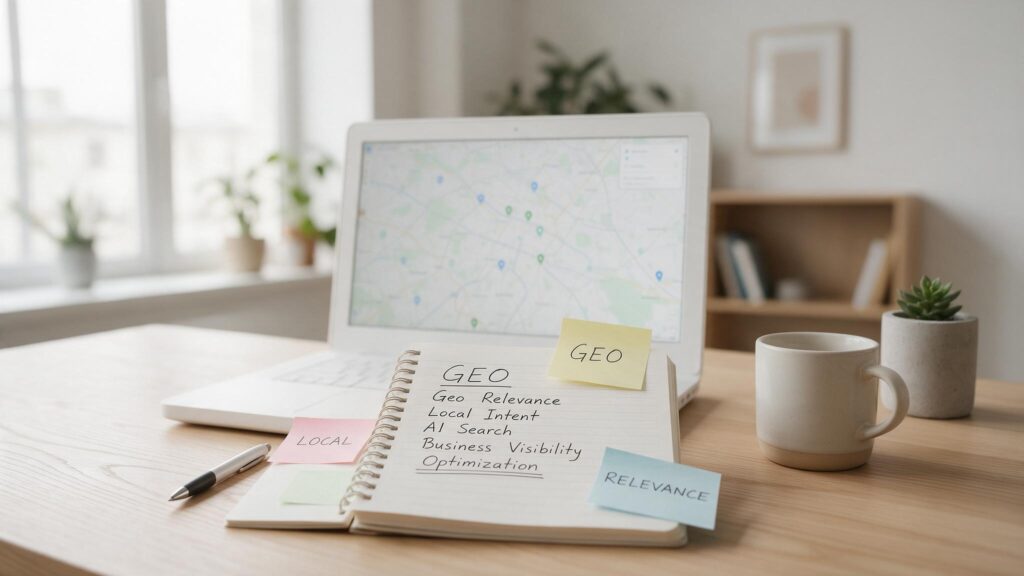
What Is GEO and How Can Your Business Appear in AI Search?
How should AI-search visibility be measured?
Measurement is less mature than traditional rank tracking, and reports should be treated carefully. AI answers can vary by wording, location, context, product and time.
Businesses can monitor a combination of:
- referral visits from identifiable AI platforms;
- search visibility and landing-page performance;
- branded searches and direct visits;
- citations or mentions for a defined set of relevant questions;
- enquiries and conversions; and
- what new customers say influenced them.
The most important measure remains business impact. A mention that produces no relevant action is less valuable than a smaller amount of visibility that creates a qualified enquiry.
Prepare for changing search behaviour
AI search is developing quickly, but businesses do not need to panic or chase every new tactic. A useful, credible and technically sound website remains the best starting point.
At Designweb, we can review how clearly your website communicates your expertise, whether important information is accessible and where your content could better support both traditional and AI-powered discovery.
Talk to us if you would like to understand what AI search means for your website and where to focus next.